Cute Forest Elf SVG
First Impressions: Whimsy That Stitches Well
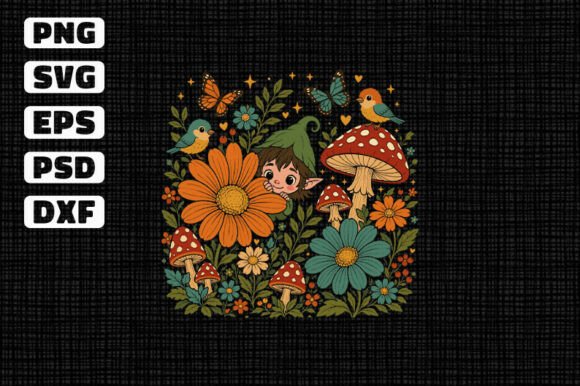
When I opened Cute Forest Elf SVG for the first time, I didn’t just see a woodland character—I saw a stitching opportunity. The design balances delicate charm with clean, intentional outlines: soft mushroom caps, layered floral accents, and an elf figure whose pose reads clearly even at small scales. It’s cottagecore without clutter—no over-rendered gradients or pixelated edges. As a designer who regularly converts digital graphics into machine embroidery designs, I immediately assessed its silhouette integrity, negative space, and potential stitch translation. This isn’t just a PNG or SVG cut file—it’s a visual idea that *wants* to be embroidered.
A Real Project Test: Embroidering a Nursery Pillow Cover
Last week, I used Cute Forest Elf SVG as the centerpiece for a custom linen pillow cover destined for a baby’s woodland-themed nursery. I resized it to fit a 4" hoop (a common sweet spot for baby items), converted it to an embroidery file using my standard workflow, and stitched it on medium-weight cotton-linen blend fabric with tear-away stabilizer. The result? A finished product that felt cohesive—not busy, not sparse. Customers browsing my Etsy shop responded strongly to how “gentle” and “handmade-presented” it looked—even though it was machine-stitched. That’s the quiet power of this design: it supports intentionality, not just decoration.
Where It Shines—and Where It Needs Thought
Cute Forest Elf SVG performs exceptionally well on stable, medium-weave fabrics like cotton twill, canvas tote bags, tea towels, and sweatshirt fronts. Its open layout allows fill stitches to breathe, and the rounded contours avoid sharp corners that snag thread or distort on curved surfaces like caps or apron pockets. As an embroidered patch or applique design, it holds up beautifully—especially when paired with satin stitch borders for subtle definition.
But here’s what I watched closely: the tiny flower details near the elf’s hair and the fine stem lines beneath the mushroom cap. On stretchy knits or thin rayon blends, those elements can blur or vanish without proper stabilizer and reduced stitch density. And while it works on dark fabric, I recommend testing thread colors in both black-and-white mockups and real fabric swatches—some pastel greens or mauves lose contrast against charcoal or navy unless you adjust brightness or add underlay.
Smart Pairings for Craft Business Use
- Custom apparel: Works best on crewneck sweatshirts, relaxed-fit tees, and kids’ hoodies—places where whimsy feels natural, not forced.
- Personalized gifts: Ideal for baby onesies, milestone blankets, and holiday stockings—especially when paired with a simple monogram or date in a clean sans-serif running stitch.
- Etsy & boutique products: Elevates handmade presentation on linen tea towels, ceramic mug sleeves (with iron-on transfer adaptation), and embroidered greeting cards (as a stitched accent).
- Digital product sellers: As a Graphics asset, it layers cleanly into printable mockups—think cottagecore branding kits, seasonal SVG bundles, or embroidery project planners.
What It Adds to Your Finished Product—Beyond Aesthetics
Using Cute Forest Elf SVG doesn’t just decorate—it communicates care. In a crowded craft market, customers notice when a design feels *considered*: balanced spacing, harmonious scale, and visual rest. That translates directly to perceived value. Buyers of embroidered patches or custom totes don’t just want “cute”—they want authenticity, cohesion, and craftsmanship. This design delivers that quietly. It also supports brand consistency: whether you’re selling on Etsy, at local craft fairs, or through your own small shop website, Cute Forest Elf SVG fits seamlessly into a broader cottagecore or nature-inspired line—without demanding heavy rebranding or color palette overhauls.
Practical Designer Notes Before You Stitch
Before committing to your next embroidery project, here’s what I always do with a new digital embroidery file like Cute Forest Elf SVG:
- Test on scrap fabric first—especially if using textured weaves or blends. Linen, terry cloth, and fleece behave differently than plain cotton.
- Review stitch density in your embroidery software. If the original file includes dense fill areas (like the mushroom cap base), consider reducing density by 5–10% for breathable wearables.
- Confirm hoop size compatibility. While scalable, very tight curves may require digitizing adjustments below 3". Don’t assume automatic scaling preserves clarity.
- Inspect small details—those tiny leaves and petals need at least 0.8mm stroke width to translate reliably in satin or fill stitch.
- Use appropriate stabilizer: Tear-away for stable wovens, cut-away for knits, and fusible + tear-away combo for lightweight linens.
- Check licensing terms before selling finished products or bundling Cute Forest Elf SVG into digital kits—especially if you're a commercial embroidery service or digital product seller.
Final Thought: Not Just Another Graphic—A Design Decision
Cute Forest Elf SVG stands out in the Crafts category because it bridges digital convenience and tactile intention. It’s not flashy—but it’s thoughtful. Not trendy—but it’s timeless enough for heirloom baby embroidery or repeat holiday collections. As someone who evaluates hundreds of embroidery files a year, I keep returning to designs that serve the *project*, not just the preview image. This one does. Whether you’re stitching a single personalized gift or building a full cottagecore line for your small shop, Cute Forest Elf SVG earns its place—not as filler, but as foundation.