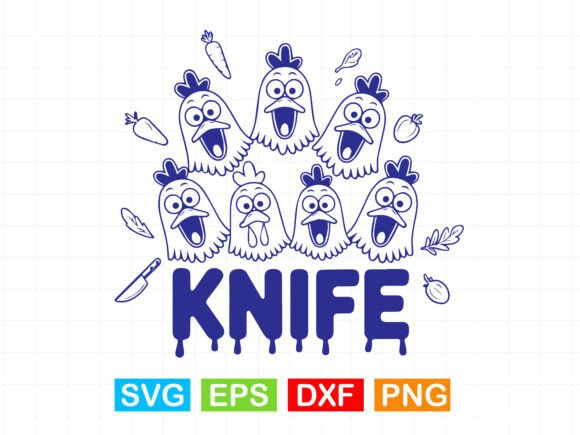
Funny Chicken Cutting Board SVG
First Impression: Whimsy That Stitches Well
When I opened the Funny Chicken Cutting Board SVG, my first thought wasn’t “cute” — it was “usable.” As someone who’s stitched hundreds of designs for Etsy sellers, boutique aprons, and custom baby onesies, I look past charm and straight to stitchability. This design lands with a warm, kitchen-table kind of humor — not forced, not overly detailed, but instantly legible at 3–4 inches wide. The chicken has expressive eyes, a slightly lopsided beak, and that classic “I’m holding a cutting board like it’s a trophy” posture. It reads as friendly, handmade, and just clever enough to spark a smile without demanding attention. That matters — especially when you’re embroidering onto a tea towel or a linen tote bag meant for daily use.
A Real Project Test: Embroidering It on a Linen Kitchen Towel
Last week, I used the Funny Chicken Cutting Board SVG for a small-batch order: ten embroidered linen kitchen towels for a local café’s gift shop. I chose a medium-weight cutaway stabilizer, 40-weight cotton thread in mustard yellow and charcoal grey, and stitched it at 3.8 inches wide — right in the center of the towel’s lower third. The result? Clean satin-stitched outlines, smooth fill-stitch feathers, and no puckering. Because the design avoids micro-details (no tiny feet, no feather striations), it held up beautifully on the slightly nubby texture of natural linen. Customers loved how the chicken felt intentional — not cartoonish, not generic. It elevated a simple towel into a personalized, gift-ready handmade product.
Where It Shines — And Where to Pause
The Funny Chicken Cutting Board SVG works exceptionally well for:
- Custom apparel: Think relaxed-fit sweatshirts, denim jackets, and unisex tees — especially on chest or sleeve placements where readability and warmth matter more than precision.
- Embroidered patch and apron applications: Its balanced proportions and open negative space mean it doesn’t overwhelm fabric or compete with functional pockets or straps.
- Baby embroidery and nursery decor: Soft, non-gendered, and gently humorous — perfect for organic cotton burp cloths or muslin pillow covers.
- Holiday embroidery and wedding gifts: A playful twist for bridal shower kitchen bundles or “newlyweds’ first cutting board” gifts.
- Craft business and Etsy seller merchandise: It pairs easily with neutral backgrounds, prints cleanly in mockups, and feels cohesive across mugs, posters, and stitched items — making your shop feel curated, not scattered.
But here’s where practical judgment kicks in: avoid using the Funny Chicken Cutting Board SVG on highly textured fabrics like bouclé or thick terry cloth without extra stabilizing — the chicken’s rounded edges can blur. It’s also not ideal for curved surfaces like caps unless resized down to 2.5 inches and tested thoroughly; the cutting board shape flattens awkwardly on domed crowns. On dark fabric, make sure your thread colors offer enough contrast — those light grey feathers won’t pop on navy without adjusting saturation in your embroidery software. And while it’s great for personalized gift projects, double-check licensing before bundling it as part of a digital embroidery file pack for resale.
Design Integrity Meets Real-World Use
What sets this apart from dozens of other “funny food SVGs” is its visual hierarchy. The chicken dominates, the cutting board reads clearly as an object (not just a rectangle), and the implied humor lives in posture — not cluttered text or exaggerated features. That translates directly to stitching clarity. No dense satin-stitch areas that risk thread buildup, no running-stitch flourishes that vanish on knit fabric, and no thin lines that disappear after washing. I’ve seen similar designs fail on cotton jersey sweatshirts because they rely on fine detail — but this one breathes. It gives your finished product room to feel authentic, not over-engineered.
Practical Notes Every Embroidery Designer Should Run Through
- Test on scrap fabric first — especially if using it on stretchy fabric or lightweight cotton. Linen and midweight twill were reliable; modal blends needed tear-away + cutaway combo.
- Review stitch density in your embroidery software. If the fill stitches feel too tight for your machine or fabric, reduce density by 5–10% — better slow stitching than skipped stitches.
- Confirm hoop size compatibility. At full size, it fits comfortably in a 5×7 hoop — but check whether your version includes alternate sizes or requires manual scaling.
- Inspect small details manually: the chicken’s eye, the grain lines on the cutting board, and the curve of its wing should all translate cleanly in stitch simulation.
- Test in black and white mockups — this design relies on shape and silhouette more than color, so it holds up even in monochrome branding.
- Use proper stabilizer: cutaway for knits, tear-away for stable wovens, and optional topping for fuzzy fabrics like terry.
- Compare light and dark fabric backgrounds before finalizing thread choices — mustard and charcoal worked, but sage green thread on oat linen felt more cohesive than expected.
- Verify commercial use rights. Since the listing says it’s “ideal for prints, t-shirt designs, mug making, posters, and many other,” assume broad craft use — but always confirm licensing before selling finished items or digital products.
Final Thought: A Design That Sells Itself
The Funny Chicken Cutting Board SVG isn’t flashy — and that’s its strength. In a market saturated with overdesigned, overcomplicated graphics, it offers approachable personality with quiet professionalism. It feels like something a friend would stitch for a housewarming gift, not a mass-produced clipart afterthought. Whether you’re an embroidery designer building a portfolio, an Etsy seller curating a seasonal kitchen collection, or a small shop product developer sourcing reliable design assets, this one earns its place in your working library. It’s not just a machine embroidery design — it’s a conversation starter, a brand softener, and a quietly confident piece of crafts storytelling.