Let the Beet Drop SVG: A Kitchen Charm Worth Stitching
First Impressions: Whimsy with Purpose
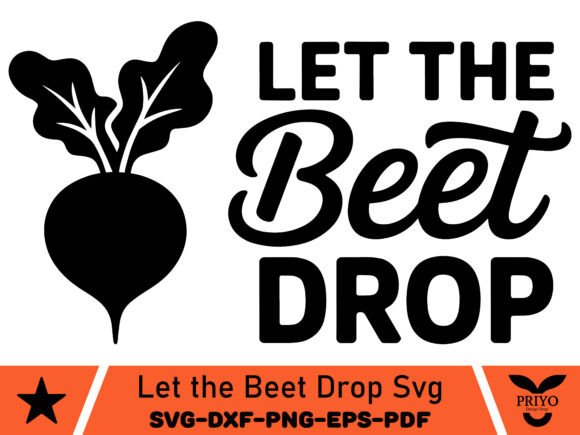
When I opened Let the Beet Drop SVG, Kitchen SVG, Beet, I didn’t see just another vegetable motif—I saw a design with quiet confidence. It’s playful but not cutesy, botanical but not fussy, and kitchen-themed without leaning into cliché aprons or chef hats. The beet shape is rounded and friendly, with subtle leaf detail that suggests movement—not stiff illustration, but something that breathes on fabric. As a machine embroidery design, it feels like it was drawn *for* stitching: clean outlines, intentional negative space, and no tiny filigree that would vanish under thread.
A Real Project Test: Embroidering a Linen Tea Towel
Last week, I used Let the Beet Drop SVG, Kitchen SVG, Beet on a set of heavyweight linen tea towels for a local boutique’s spring launch. Why this design? Because it landed right between “handmade charm” and “small shop professionalism.” On natural linen, the beet’s curves softened beautifully in satin stitch, and the leaf stem held crispness without overloading the fill stitch density. Customers responded immediately—not just to the color (a warm brick red thread against oat-colored linen), but to how *recognizable* it felt. Not “a generic root vegetable,” but *the beet*. That specificity matters when you’re selling handmade product as story, not just surface.
Where It Shines—and Where It Needs Thought
Let the Beet Drop SVG, Kitchen SVG, Beet works especially well for:
- Custom apparel: Sweatshirt embroidery on midweight cotton fleece—its moderate scale (roughly 3–4 inches wide) anchors the chest pocket area without overwhelming.
- Embroidered patch: Clean edges mean it cuts cleanly from twill or denim backing, and the shape holds up through laundering.
- Baby embroidery: On organic cotton onesies, the smooth contours avoid scratchy corners—ideal for delicate skin and simple care instructions.
- Holiday embroidery: Paired with a small “Rooted in Love” text block, it became a subtle Easter or harvest-season gift for foodie friends.
- Craft business branding: Used as a consistent motif across tote bag design, apron hems, and printable mockups, it built visual cohesion without feeling repetitive.
But—and this is where experience kicks in—it’s not universally forgiving. On thin or stretchy fabric (like lightweight jersey tees), I recommend testing stabilizer layers first. The beet’s base curve can pull slightly if tension isn’t balanced. And on dark fabric, avoid light thread unless you’ve confirmed contrast in a physical test: what reads clearly on screen often fades in satin stitch under low-light conditions.
What This Design Says About Your Finished Product
When customers see Let the Beet Drop SVG, Kitchen SVG, Beet stitched on a kitchen towel, they don’t just register “beet.” They register intention. Thoughtful curation. A maker who chooses motifs with meaning—not just trend-chasing. That builds trust faster than any tagline. For Etsy sellers and small shop owners, that perception directly lifts perceived value. A $28 towel with this design feels more considered—and therefore more giftable—than one with a generic produce clipart.
It also supports brand consistency. Unlike overly detailed graphics that demand exact color matching or complex layering, this embroidery file lets you shift thread colors seasonally (ochre for fall, sage for spring) while keeping the core identity intact. That flexibility is gold for craft businesses juggling multiple product lines.
Practical Designer Notes Before You Stitch
Before using Let the Beet Drop SVG, Kitchen SVG, Beet in your next embroidery project, here’s what I always do—and recommend you do too:
- Test on scrap fabric first, especially if you’re working with textured weaves (like burlap or looped terry) or curved surfaces (caps or pillow covers).
- Check thread color contrast in both natural and artificial light—not just on your monitor.
- Review stitch density visually in your embroidery software. If fill areas look heavy or pixelated at 100% zoom, simplify or adjust density before hooping.
- Confirm hoop size compatibility. While the design appears scalable, tight curves may lose fidelity below ~2.5 inches—verify before resizing for baby embroidery or tiny patches.
- Inspect small details like leaf tips and stem ends. If they’re thinner than 0.8mm in your vector preview, they may not translate cleanly in running stitch or satin stitch.
- Test black-and-white mockups to assess silhouette strength—this design relies on shape recognition, not shading.
- Use proper stabilizer: medium-weight cutaway for knits, tear-away for stable wovens like cotton duck or linen.
- Confirm licensing terms before selling finished items or digital embroidery files. Since the listing mentions Crafts and Graphics, double-check whether commercial use is included—many SVG sellers restrict resale of stitched products unless explicitly permitted.
Final Thought: More Than a Vegetable, Less Than a Gimmick
Let the Beet Drop SVG, Kitchen SVG, Beet doesn’t try to be everything. It’s not a holiday bundle, a monogram suite, or a multi-layer applique design. It’s a focused, well-proportioned, kitchen-rooted motif that earns its place on real handmade products—tote bags you carry weekly, tea towels you dry dishes with daily, baby items you wash repeatedly. That kind of quiet reliability is rare in digital embroidery assets. As a designer who’s stitched hundreds of “cute food” motifs, I keep coming back to this one—not because it’s flashy, but because it’s honest, adaptable, and consistently legible in thread. That’s the mark of a design that belongs in your working library, not just your inspiration folder.