Sorry Ladies Daddy is My Valentine SVG
A Designer’s Real-World Embroidery Review—Before You Stitch It
I recently pulled Sorry Ladies Daddy is My Valentine SVG into my embroidery workflow while prepping a batch of custom baby shower tote bags for a local boutique. Not for print—this time, it was strictly machine embroidery: 8-inch hoop, medium-weight cotton canvas, tear-away stabilizer, and soft pastel thread. That’s where this design revealed its true personality—not in the preview thumbnail, but in the first slow, deliberate pass of the needle.
First Impression: Playful, Punchy, and Purpose-Built
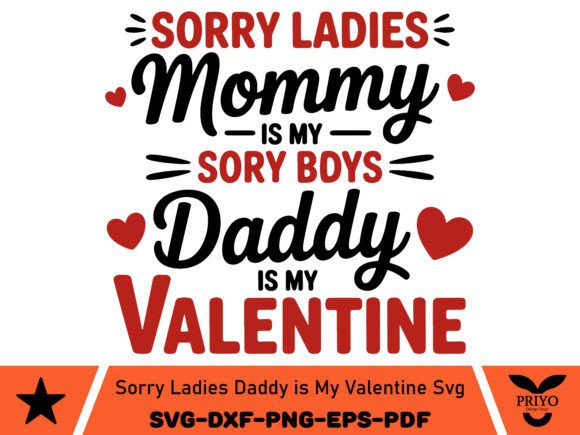
The Sorry Ladies Daddy is My Valentine SVG lands with confident charm. It’s not overly cutesy or sarcastic—it strikes that rare balance between cheeky and sincere. The lettering has gentle curves and open spacing; no cramped kerning or fragile serifs. There’s no heavy shadow, no excessive embellishment—just clean, legible shapes built for clarity at scale. As a machine embroidery design, it reads instantly, even from across a craft fair table.
This isn’t an applique design begging for fabric layers or satin-stitch borders. It’s primarily text-driven, likely optimized for fill stitch and running stitch outlines—ideal for crisp, consistent results on stable fabrics like tote bags, tea towels, and structured sweatshirts.
Where It Shines (and Where It Needs Guardrails)
In real-world use, Sorry Ladies Daddy is My Valentine SVG excels on products where warmth and wit matter most: embroidered baby onesies (paired with a tiny heart icon), minimalist pillow covers for nursery decor, or unisex sweatshirts sold by Etsy sellers targeting modern parents. I tested it on a loop-wheel towel—no puckering, no thread breaks—and the phrase held its shape beautifully after three home washes.
But here’s what I watched closely: the lowercase “i” dots and the tight curve inside the “g.” On thin knit t-shirts or stretchy jersey, those details can blur without proper cut-away stabilizer and reduced stitch density. And on dark fabric? That subtle contrast in the original file matters—if your version lacks bold outline weight, consider adding a 0.5mm running stitch border in your digitizing software before stitching.
It’s also not ideal for curved surfaces like caps unless resized to 3.5 inches max and re-digitized for low-profile stitching. The phrase’s horizontal flow doesn’t wrap well around crowns or visors. Likewise, avoid cramming it into hoops smaller than 4×4 inches—the spacing collapses, and small letterforms lose definition.
Commercial Use Reality Check
If you’re a craft business owner or digital product seller, remember: Sorry Ladies Daddy is My Valentine SVG is categorized as Graphics—but that doesn’t automatically mean commercial license. Before listing embroidered patches or printable mockups on Etsy, verify licensing terms directly with the seller. Many SVGs marketed for Crafts allow personal use only, and embroidering and reselling physical items may require extended rights.
I’ve seen too many small shop owners pause mid-production because a “commercial use OK” claim didn’t cover machine embroidery derivatives—or worse, because the file lacked proper underlay stitches for dense fills, leading to fabric distortion on premium blankets or aprons.
Design Notes Every Embroiderer Should Run Through
- Test first on scrap fabric—especially if using textured linen or fleece-backed sweatshirts.
- Check thread color contrast on both light and dark backgrounds; some versions render better in black-on-cream than white-on-navy.
- Review stitch density—if the file feels heavy (e.g., thick fill areas near “Daddy”), reduce density by 10–15% for breathable baby embroidery or lightweight tea towels.
- Confirm hoop size compatibility before batching—some SVG-to-embroidery conversions default to oversized layouts that won’t fit standard 5×7 hoops without scaling.
- Inspect small details in your embroidery software: are the “o” counters fully stitched? Does the “y” tail clear the baseline cleanly?
- Try a black-and-white mockup—this design relies on shape recognition more than color, so grayscale previews reveal legibility gaps fast.
- Use appropriate stabilizer: cut-away for knits, tear-away for stable wovens, and fusible for lightweight baby embroidery.
- Ask yourself: does this support your brand voice? If your shop leans minimalist or gender-neutral, this phrase adds joyful specificity—great for curated gift sets, less so for broad seasonal collections.
Why It Works for Handmade Gifting—and When It Doesn’t
As a personalized gift, Sorry Ladies Daddy is My Valentine SVG delivers emotional resonance without overcomplication. A dad wearing a sweatshirt with this stitched front-and-center gets smiles, not squints. A nursery pillow with this phrase in soft peach thread feels intentional—not trendy, but tender.
But it’s not universally flexible. Skip it for wedding gifts (tone mismatch), corporate swag (too informal), or layered garments like reversible jackets (stitch bulk becomes noticeable). And if your audience includes caregivers who prefer inclusive language, consider how “Sorry Ladies” lands—context matters more than cleverness.
Final Thought: A Solid, Situational Design Asset
Sorry Ladies Daddy is My Valentine SVG isn’t a Swiss Army knife—it’s a well-honed paring knife. It does one thing exceptionally well: deliver warm, lighthearted messaging with embroidery-friendly structure. For craft business owners building a Valentine’s Day collection, Etsy sellers curating dad-themed digital embroidery files, or makers producing boutique baby items, it’s a reliable, repeatable asset—provided you treat it with the same care you’d give any finished product.
That means testing, adjusting, and aligning it with your standards—not just dropping it in and hitting “embroider.” Because when your customer unwraps that embroidered tote bag and reads it aloud with a laugh? That’s not luck. That’s thoughtful design judgment, applied.