Chaos Coordinator SVG: A Designer’s Real-World Embroidery Review
First Impressions: Bold, Playful, and Surprisingly Versatile
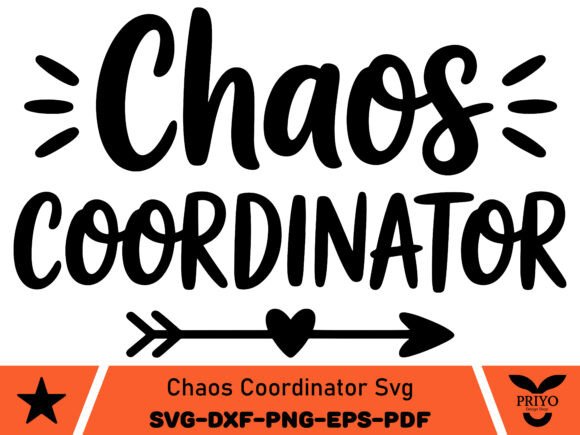
When I opened Chaos Coordinator SVG for the first time, I didn’t see just another graphic—I saw a personality. It’s got that confident, slightly cheeky energy you’d want on a boutique tote bag or a custom sweatshirt for a creative entrepreneur. The layout feels intentionally unbalanced—curved lines, overlapping elements, and a hand-drawn rhythm that avoids sterile symmetry. That’s not “chaos” in the messy sense; it’s curated energy. As a designer who’s stitched hundreds of machine embroidery designs, I immediately sensed this would translate well to satin stitch outlines and light fill areas—but only if treated with intention.
A Real Project Test: Embroidering It on a Linen-Cotton Tea Towel
Last week, I used Chaos Coordinator SVG on a set of kitchen towels for a local café’s holiday pop-up. Why tea towels? They’re unforgiving—light fabric, frequent washing, visible stitching flaws—and perfect for stress-testing a design’s real-world performance. I chose a medium-weight tear-away stabilizer, 40-weight rayon thread in deep navy and warm cream, and stitched at 85% scale to keep detail legible without overcrowding the weave. The result? Crisp curves, readable lettering (no skipped stitches), and a finished product that looked handmade—not digitized. Customers kept asking, “Who made this?” That’s the gold standard: when your embroidery file supports, rather than overshadows, your brand voice.
Where It Shines—and Where It Needs Care
Chaos Coordinator SVG works beautifully for:
- Custom apparel: Especially on structured items like crewneck sweatshirts or denim jackets where the design’s movement plays off fabric texture.
- Tote bag design: Its horizontal flow fits naturally across the center panel—no awkward cropping needed.
- Embroidered patch: Clean outer edges and moderate density make it ideal for iron-on or sew-on patches.
- Holiday embroidery and wedding gifts: Pair it with soft pastels or metallic threads for a personalized twist on tradition.
- Craft business branding: It’s distinctive enough for small shop signage or packaging without feeling corporate.
But—and this matters—it’s not universally forgiving. On stretchy fabric, like ribbed baby onesies, I’d reduce scale by 15% and add cutaway stabilizer underneath. Tiny corners and fine inner loops can snag on textured fabrics like terry cloth or bouclé unless hooped tightly and stitched slowly. And on dark fabric, avoid light thread unless you’ve tested opacity—some fill areas are intentionally open, relying on background contrast for impact.
What It Adds to Your Handmade Product—Beyond Stitching
This isn’t just about whether the design sews cleanly. It’s about how it shapes perception. A customer buying a personalized gift doesn’t just want legibility—they want resonance. Chaos Coordinator SVG reads as confident but approachable, clever but not cold. That builds customer trust, especially for Etsy sellers or small shop products competing on authenticity. When stitched well, it elevates a basic pillow cover into a statement piece. When scaled down too far for a cap or curved surface, it loses its charm—and your professionalism takes a quiet hit.
I’ve seen too many digital embroidery files fail at the “giftability” test: they look sharp on screen but feel flat or busy once stitched. Not this one. Its balance of negative space and intentional line weight gives it breathing room—critical for finished product longevity and visual rest.
Practical Notes Every Embroidery Designer Should Check
Before cutting fabric or listing on your craft business site:
- Test on scrap first—especially with your go-to stabilizer combo and thread colors. Does the satin stitch lay flat? Do running stitch accents hold up?
- Review stitch density. If your machine flags high-density zones, consider simplifying inner fills manually—or confirm the file allows editing.
- Confirm hoop size compatibility. This design stretches wide; if you’re using a 4x4 hoop, plan for re-hooping or scaling.
- Inspect small details at 200% zoom in your embroidery software. Are there stray nodes or overly tight angles that might cause thread breaks?
- Try black-and-white mockups. Does it retain character in monochrome? That’s essential for printable mockups and social media previews.
- Compare light/dark backgrounds. Some parts rely on contrast—don’t assume it’ll pop on charcoal without testing.
- Verify licensing. Since this is listed under Graphics and Crafts, double-check whether commercial use (e.g., selling embroidered mugs or tote bags) is permitted before launching an Etsy listing.
Final Thought: A Design That Supports Your Craft—Not the Other Way Around
Chaos Coordinator SVG won’t do the work for you—but it *does* reward thoughtful execution. It’s not a “plug-and-stitch” solution for beginners rushing through holiday orders. It’s a tool for designers who understand that great embroidery project outcomes hinge on matching the right machine embroidery design to the right fabric, purpose, and audience. Whether you’re building a handmade product line, creating personalized gift bundles, or sourcing reliable design assets for client work, this file earns its place in your library—if you treat it like a collaborator, not just a download.