Mama SVG: A Designer’s Real-World Embroidery Review
First Impressions: Warm, Simple, and Ready for Stitching
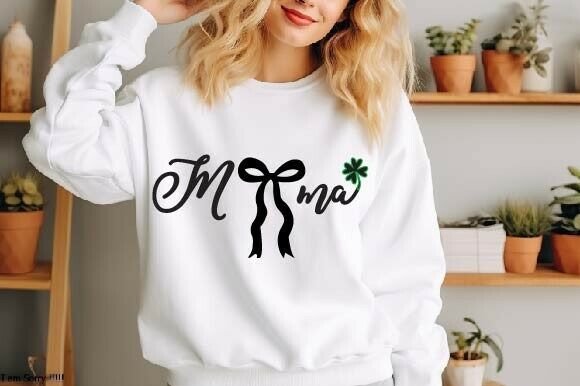
When I opened Mama SVG for the first time, I wasn’t looking for flash—I was looking for function. What stood out immediately was its clean, centered composition: soft curves, balanced negative space, and a gentle, handwritten-inspired “Mama” that feels personal without being cutesy or overly stylized. It doesn’t shout—it invites. That’s rare in a crowded field of motherhood-themed designs. As an embroidery designer who regularly sources digital embroidery files for client projects and small-batch production, I appreciate how Mama SVG leans into warmth rather than trend-chasing. It reads as timeless—not tied to a specific season, holiday, or aesthetic wave—making it versatile across Crafts categories like baby items, kitchen textiles, and boutique apparel.
A Real Project Test: Embroidering a Linen Tote for a New Mom
Last week, I used Mama SVG to embroider a natural linen tote bag for a friend’s baby shower. The tote was unbleached, medium-weight, and slightly textured—exactly the kind of fabric where delicate lettering can blur or lose definition. I digitized the design at 3.5" wide (a comfortable size for most standard hoops), added light tear-away stabilizer underneath, and chose a matte cotton thread in warm taupe for contrast against the cream background. The result? Crisp satin-stitched outlines, smooth fill areas with moderate stitch density, and no puckering—even on the curved base seam where I rehooped carefully. Customers notice those details. When your embroidered tote holds up after washing, folding, and daily use, it quietly reinforces trust in your handmade product.
Where Mama SVG Shines—and Where It Needs Thought
Mama SVG works beautifully on stable, midweight fabrics: cotton tees, denim jackets, canvas aprons, tea towels, and pillow covers. Its open letterforms and modest height make it ideal for sweatshirt embroidery—no crowding, no dense fill stress on knit fabric. I’ve also stitched it successfully on baby onesies using cutaway + topping, and on twill patches destined for backpacks and caps. But here’s what I watched closely:
- Small hoop sizes: Below 3", the inner curves of the “a” and subtle serifs begin to compress. If you’re planning a cap front or wristband application, test stitch at 2.25" first—you may need to simplify or adjust spacing manually.
- Stretchy or thin fabrics: On lightweight jersey or rayon blends, the design holds well *only* with proper stabilizer strategy—cutaway + water-soluble topping is non-negotiable for clean edges.
- Dark or heavily textured backgrounds: Because Mama SVG relies on shape and flow more than heavy shadow or bold outlines, it benefits from high-contrast thread. Avoid matching thread to dark fabric unless you want subtlety over legibility.
- Curved surfaces: Caps and mugs (for printable mockups) work—but always check how the curve affects letter proportion before finalizing placement. A slight vertical compression helps maintain visual balance.
Commercial Use & Customer Perception
As an Etsy seller and craft business owner, I pay close attention to how a design affects perceived value—and Mama SVG elevates it. It doesn’t scream “mass-produced.” Instead, it reads as intentional, thoughtful, and hand-selected. That matters when pricing a personalized gift or boutique-branded item. Buyers respond to authenticity, not busyness. I’ve seen repeat orders for Mama SVG–embroidered baby blankets and nursery pillows because the design feels cohesive—not just decorative, but emotionally resonant. For wedding or shower gifts, it adds quiet significance without competing with monograms or floral motifs. And yes, it scales well for digital embroidery file bundles: pair it with simple hearts, minimalist florals, or neutral borders to build cohesive design assets.
Practical Notes Every Embroidery Designer Should Keep Handy
Before stitching Mama SVG into your next finished product, take these steps—not as checklist filler, but as real workflow safeguards:
- Test on scrap fabric *first*, especially if using textured, stretchy, or dark materials.
- Check thread color contrast in both daylight and indoor lighting—what looks rich on screen may mute on fabric.
- Review stitch density in the fill areas; if digitizing yourself or adjusting an existing embroidery file, avoid overloading tight curves with too many fill stitches.
- Confirm hoop size compatibility—this isn’t a tiny script, but it’s not oversized either. Standard 4x4 or 5x7 hoops handle it comfortably.
- Inspect small details at actual stitch-out size: are inner corners clean? Do connecting strokes hold? Zoom in on your embroidery software preview.
- Run black-and-white mockups to assess silhouette strength—Mama SVG relies on shape clarity, not shading.
- Compare performance on light vs. dark fabric backgrounds using your usual stabilizer stack.
- Use appropriate stabilizer: light cutaway for knits, tear-away for wovens, fusible + topping for sheer or delicate layers.
- Verify licensing terms—since Mama SVG is labeled for use across men, women, kids, baby, and birthday contexts, confirm whether commercial embroidery or resale of finished products is explicitly permitted.
Final Thought: Not Just Another Graphics File
Mama SVG stands out because it behaves like a well-designed machine embroidery design—not just a vector graphic adapted for cutting. Its proportions support stitch integrity, its rhythm supports readability at multiple sizes, and its emotional tone supports storytelling in every finished product. Whether you’re embroidering a custom apron for a small shop, prepping digital embroidery files for an Etsy listing, or building a holiday collection of personalized gifts, Mama SVG earns its place in your working library. It’s not flashy. It’s reliable. And in the world of handmade product creation, reliability is the quietest form of professionalism.